
Local flatbed planning
Greenwich sits within Greenwich, England and South and London, and the location record uses a recorded population of 296,206, coordinates at 51.4728, 0.0530, and Greenwich as the administrative context. Greenwich, Greenwich is treated as a large urban market with 296,206 recorded residents, which is why this page is indexable while smaller nearby places are handled as covered areas rather than extra near-duplicate pages.
3.5 tonne flatbed use cases
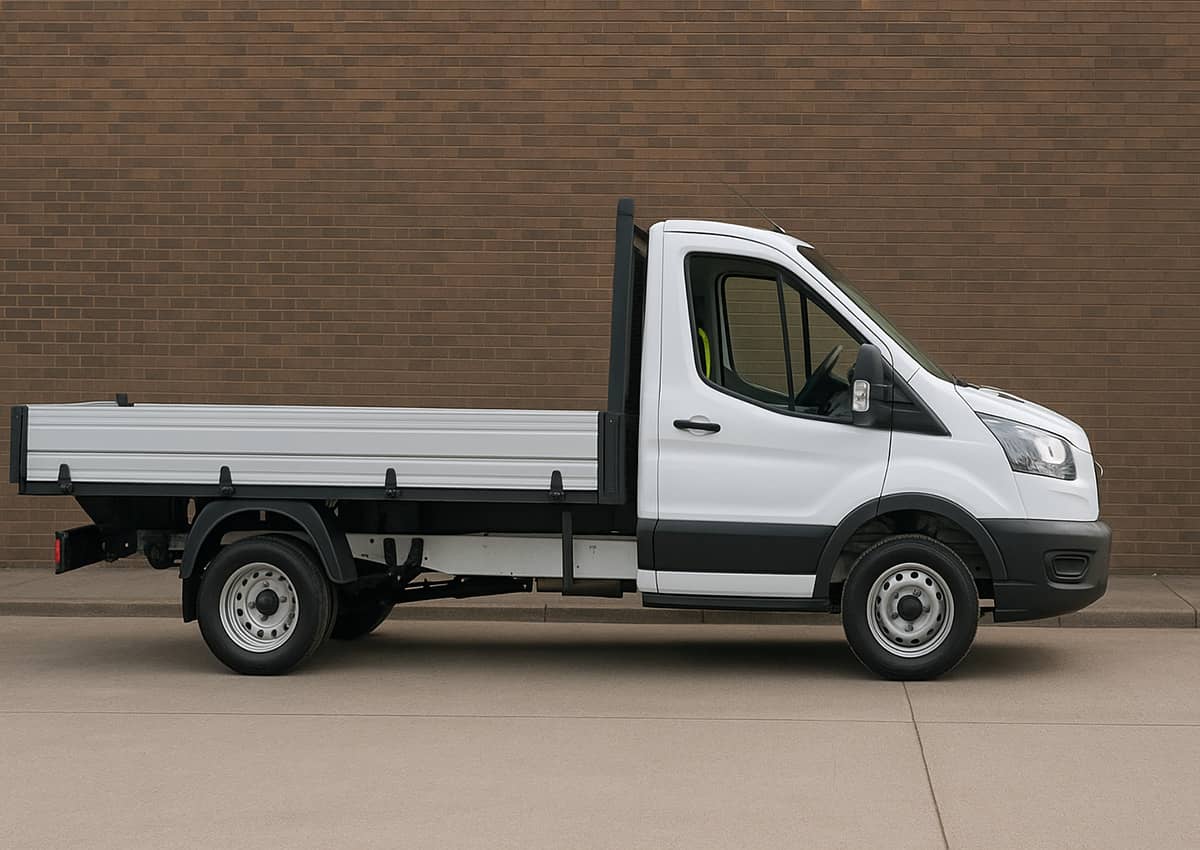
A 3.5 tonne flatbed suits the enquiries where access and handling are the bigger problem than gross load size: fencing, boards, tools, scaffold planks, compact machinery, garden materials and small pallet runs. Around Greenwich, the quote should confirm forklift access, tail-lift alternatives and waiting time before the vehicle is reserved.
7.5 tonne flatbed use cases
Ask about a 7.5 tonne dropside when the job involves several pallets, longer steel, timber packs, staging, machinery or a site-supply run that would overload a smaller vehicle. The team should check route restrictions, driver details, unloading space and whether the load needs side access or a different body style.
Construction and materials context
For Greenwich, the local fact set currently includes Greenwich administrative area, Greenwich statistical area, England country record, 296,206 population record, large urban 20k+ location derived from population threshold and London-linked clean-air, lorry-control and site-access check planning profile. That information is useful context for trade coverage, but the operational decision still comes from exact site details: gate instructions, surfaces, turning space, delivery time and who is loading or unloading.
Nearby areas covered in copy
Nearby smaller places such as Kidbrooke, Woolwich, Eltham, Lewisham, Welling, Catford, Newham and East Ham are treated as covered areas in the planning copy rather than separate indexable pages. If a job starts in one of those places and finishes in Greenwich, or the other way round, explain that relationship during the quote call because it can affect parking, turning space, waiting time and loading bay access.
Nearest linked locations
For jobs crossing the wider area, compare Greenwich with nearby live pages such as Woolwich (1.1 miles), Eltham (1.5 miles), Lewisham (2.6 miles), Welling (2.6 miles), Catford (3.7 miles) and Newham (3.8 miles). The right page is usually the one closest to the pickup, return point or main site address.
Booking checks before the quote
For Greenwich, the commercial signal set covers tipper-versus-flatbed checks for loose material or landscaping work around Greenwich, compact machinery, plant attachments and tool cages between Greenwich and Kidbrooke, Woolwich and Eltham, driver entitlement, insurance position and larger-vehicle compliance for jobs in Greenwich, London-linked clean-air, lorry-control and site-access check for flatbed, dropside and open-bed hire, construction materials, pallets, scaffolding, timber, steel and machinery transport in Greenwich and trade deliveries, builders' merchant runs and site supply movements near Greenwich. Those examples should guide the call, but they do not replace a load check: confirm whether the item is loose, palletised, bundled, wheeled, fragile, weather-sensitive or awkward to restrain.
Benefits to confirm
Phone-led quote flow: Every enquiry starts with load, route, access, timing and driver checks so the truck type is matched to the job. Delivery and collection checks: The team can discuss delivery and collection options where practical for the selected vehicle and route. Load and access planning: Payload, bed length, side-loading, tipping needs, tail-lift alternatives and load restraint are checked before booking. UK regional coverage: The six-site network covers qualifying UK towns and cities, with smaller nearby places mapped into parent pages. Flexible hire periods: Short hire periods, repeat work and longer commercial requirements can be discussed during the quote call. Commercial vehicle advice: If a flatbed is not the right body style, the team can discuss dropside, tipper, box or curtainside alternatives. These benefits are checked against vehicle availability, route, hire length, driver details, insurance position and delivery or collection needs; they are not blanket promises for every Greenwich enquiry. For flatbed work, the practical questions are usually more important than the headline price because site access, loading arrangements and load restraint can decide whether the vehicle can be supplied at all. Also state whether the vehicle is needed for one movement, repeated same-day runs, a longer hire period or a collection after unloading, because that can change availability and delivery planning.
Final planning note
The final Greenwich booking check should cover forklift access, tail-lift alternatives and waiting time, hire dates, addresses, driver licence details, insurance position and whether delivery or collection is needed. London-linked jobs should include a current ULEZ, LEZ, Direct Vision Standard and lorry-control check where the exact route or vehicle weight makes those schemes relevant.